
Dog Park Mental Health: Benefits for Dogs and Owners (2026)
How dog parks benefit mental health — for dogs through enrichment and socialization, and for owners through exercise, social connection, routine, and the human-dog bond.
We tend to think of the dog park as exercise, but its biggest payoff may be invisible: dog park mental health benefits run deep, for both ends of the leash. A good off-leash session leaves dogs calmer and more content and gives their owners movement, connection, and routine — all powerful supports for human wellbeing. This guide explores how dog park mental health works for dogs and for people, and how to get the most from every visit.
Ready to build it into your week? Browse the directory and filter for fenced parks, or open the live map to find one near you. If your local run isn’t listed yet, you can add it in seconds.
Dog Park Mental Health Benefits for Dogs
For dogs, the mental-health value of a park comes from three things working together: physical exercise, social interaction, and mental enrichment. A real run burns the energy that otherwise curdles into restlessness; play with other dogs satisfies a deeply social species; and the flood of new sights, smells, and experiences gives the brain a genuine workout. Together, they reduce the boredom, anxiety, and frustration that drive a huge share of problem behaviors — barking, chewing, pacing, and destructiveness.
The result is the “good tired” every owner recognizes: a dog that comes home satisfied and settles deeply rather than bouncing off the walls. Scent and exploration in particular are profoundly enriching for dogs, who experience the world largely through their noses. The American Kennel Club’s guidance on canine enrichment and exercise underscores how much mental stimulation matters to a dog’s wellbeing — and the park delivers it in abundance.
Dog Park Mental Health Benefits for Owners
The dog park mental health story isn’t just about dogs. For owners, a regular park habit quietly stacks up some of the most evidence-backed supports for mental wellbeing:
- Physical activity — even a gentle walk to and around the park lifts mood and lowers stress.
- Time outdoors and in nature, linked to reduced anxiety and better focus.
- Social connection — dog parks are one of the few places strangers chat easily, and owners often form real friendships and a sense of community.
- Routine and purpose — having a dog that depends on you for daily outings provides structure that’s especially valuable during hard times.
- The human-animal bond itself, which research consistently links to lower stress and greater wellbeing.
The AVMA’s overview of the human-animal bond and the research summarized by organizations like HABRI document these benefits in depth. Many owners find the daily park trip is as good for their own head as it is for their dog’s.
How Socialization Supports Dog Park Mental Health
Socialization deserves its own spotlight, because it’s where canine and human benefits overlap. Dogs are a social species, and positive contact with other dogs helps them maintain confidence and social fluency, burn mental energy, and avoid the loneliness and frustration that isolated dogs can develop. Well-socialized dogs tend to be more relaxed, adaptable, and resilient — calmer in new situations and less prone to fear-based behavior.
For owners, that same social fabric provides connection and belonging. The key is quality over quantity: a few good, well-matched interactions in a calm setting build far more confidence than a chaotic, overwhelming free-for-all. For dogs still developing these skills, our guides to puppy socialization and introducing a dog to a dog park show how to build positive experiences step by step.
Getting the Most Mental-Health Benefit
To maximize the dog park mental health payoff for both of you, a few habits help:
- Go regularly. A consistent rhythm beats occasional marathons for both dog and owner.
- Choose calm over chaos. A quieter park or off-peak hour produces better, less stressful experiences — especially for sensitive dogs.
- Let your dog sniff and explore, not just sprint; scent work is deeply enriching.
- Be present. Watching and engaging with your dog (rather than your phone) strengthens the bond and lets you keep play positive.
- Know when the park isn’t the answer. It’s a wonderful support, but not a treatment for clinical anxiety in dogs or people — for those, a professional plan comes first.
Done well, the daily park visit becomes a small ritual that reliably improves the mood of everyone involved. For dogs whose energy needs the outlet most, pair it with the enrichment ideas in our apartment dogs guide.
The Science Behind Dog Park Mental Health
The dog park mental health benefits aren’t just feel-good intuition — they line up with well-established science on both sides of the leash. Physical exercise triggers the release of endorphins and helps regulate stress hormones like cortisol, which is why a good run leaves both dog and owner calmer. Time in green space has its own documented effect on mood and attention, a phenomenon researchers call “green exercise,” and a tree-lined park delivers it for free.
The human-animal bond adds another layer: positive interaction with a dog is associated with the release of oxytocin — the same hormone involved in social bonding — and with measurable drops in stress for many people. And social connection, one of the strongest predictors of human wellbeing, comes built into the park, where shared dog ownership makes conversation easy and recurring. For dogs, enrichment and play satisfy hardwired needs; a species built to explore and socialize suffers without outlets for those drives, and the park supplies both. Organizations like the AVMA and research collected by HABRI summarize this growing evidence base. None of it replaces professional care for diagnosed conditions, but it explains why so many owners describe the daily park trip as genuinely good for the soul.
A Weekly Routine for Mental Wellbeing
You don’t need a perfect schedule to capture the benefits — just a consistent rhythm. A simple weekly pattern might look like:
- Most days: a walk plus a shorter park stop or sniffy exploration for both exercise and decompression.
- A few times a week: a longer off-leash session at a favorite park for real running and socializing.
- Daily at home: ten minutes of enrichment or training to keep your dog’s brain engaged between outings.
- Weekly for you: treat the park as your own mental-health appointment — fresh air, movement, and a friendly chat all count.
The magic is in the consistency, not the intensity. A reliable daily ritual of movement, nature, connection, and time with your dog steadily supports the mood of everyone involved — and it’s one of the rare wellness habits that’s genuinely enjoyable to keep.
When the Dog Park Isn’t Enough
As powerful as the dog park mental health benefits are, it’s important to be honest about their limits — for both dogs and people. The park is a wonderful support for wellbeing, not a treatment for clinical conditions. A dog with genuine separation anxiety, noise phobia, or fear-based reactivity needs a dedicated behavior plan, often with a qualified trainer or veterinary behaviorist; a busy park can actually make an anxious or reactive dog worse, not better. Forcing a fearful dog to “socialize” usually backfires. For these dogs, calmer alternatives — a quiet walk, a one-on-one playdate, or decompression away from crowds — do far more good.
The same honesty applies to owners. Fresh air, movement, and friendly chats genuinely lift mood, but they aren’t a substitute for professional mental-health care when it’s needed. If you’re struggling, the park can be one helpful piece of a bigger picture, alongside the support of a doctor or therapist.
There are also dogs for whom the park simply isn’t the right fit — some are happiest with their own family and a couple of known dog friends rather than a rotating crowd of strangers, and that’s perfectly healthy. The goal isn’t to force every dog (or owner) into the park, but to use it where it helps: as a reliable, enjoyable source of exercise, enrichment, and connection for the many dogs and people who thrive on it. Read your own dog honestly, and lean on the park for what it does best while turning to other tools for what it doesn’t.
Frequently asked questions
Are dog parks good for a dog’s mental health?
Yes. For dog park mental health, parks provide three things that strongly support canine wellbeing: physical exercise, social interaction with other dogs, and mental enrichment through new sights, smells, and experiences. Together these reduce boredom, anxiety, and the frustration that drives many problem behaviors, leaving most dogs calmer and more content.
Can going to the dog park improve my own mental health?
It often does. Getting outside, moving your body, spending time with your dog, and chatting with other owners all support mental wellbeing. Regular dog park visits build exercise, routine, social connection, and a sense of community into your week — all things linked to better mood and lower stress.
How does socialization help a dog’s wellbeing?
Dogs are social animals, and positive contact with other dogs helps them maintain confidence and social skills, burn mental energy, and avoid the loneliness and frustration that isolated dogs can develop. Well-socialized dogs tend to be more relaxed and adaptable, which makes for a calmer, happier dog overall.
Will the dog park calm down an anxious or hyperactive dog?
For many dogs, yes — a good balance of physical exercise and mental stimulation leaves them genuinely satisfied and more settled at home. It’s not a cure for clinical anxiety, which needs a dedicated plan, but for boredom-driven restlessness and excess energy, regular park time makes a real, visible difference.
Good for your dog, good for you
The dog park mental health benefits are mutual and real: dogs get the exercise, socialization, and enrichment that keep them calm and content, while owners get movement, connection, routine, and the steadying power of the human-dog bond. Build the visit into your week, keep it calm and positive, and stay present, and that simple daily outing becomes one of the most reliably good-for-you habits you have. Few things improve two species’ moods at once quite like a good dog park — a patch of green where, for half an hour, both ends of the leash get exactly what they need. It’s one of the simplest, most enjoyable wellness habits there is — good for your dog, and quietly good for you.
Find a dog park near you on Dog Park Finder USA →, with fencing status, photos, and reviews, or open the live map to find the closest one right now.
Compare nearby dog parks before you leave
Open the directory to check fenced status, reviews, photos, map distance, and local park details across the USA.
Keep reading
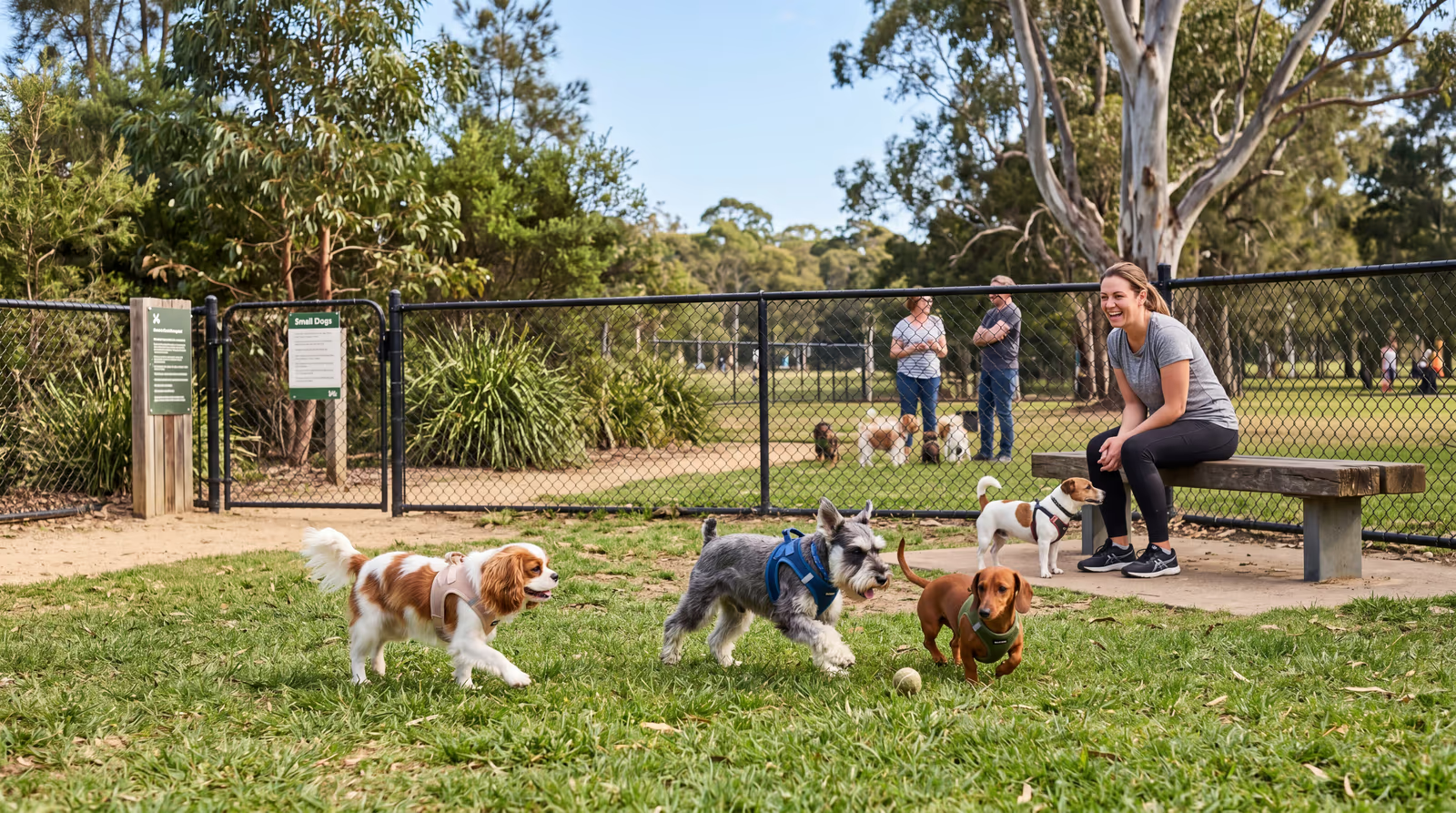
The Best Dog Parks for Small Dogs (2026): A Safe Owner's Guide
How to choose the best dog parks for small dogs — what to look for, small-dog areas, staying safe around bigger dogs, the best times to visit, and tips for nervous little dogs.

Off-Leash for Greyhounds in the USA (2026): Rules, Recall and Safety
A guide to off-leash life for greyhounds in the US, muzzles and leash laws, whether greyhounds can go to dog parks, managing prey drive and recall, and safer options.

Dog Parks in Winter (2026): Keeping Your Dog Active in the Cold
A guide to dog parks in winter, why to keep visiting, cold-weather safety for paws and coats, handling mud and short days, what to bring, and warm indoor alternatives.