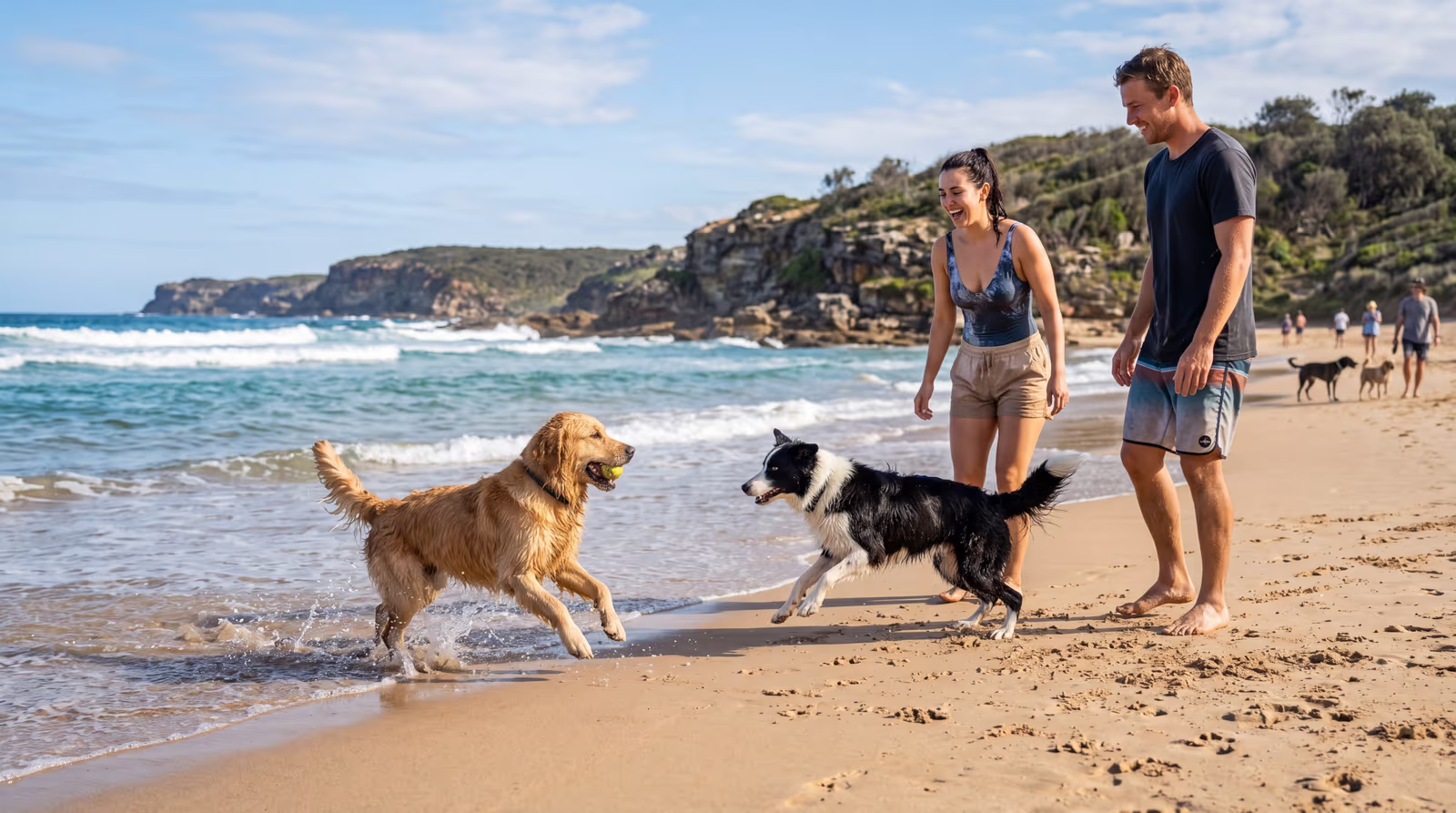
Dog Beach Near Me: How to Find Your Closest Off-Leash Beach (2026)
How to find a dog beach near you anywhere in the US — the fastest search tools, how dog beach rules and hours work, the best off-leash beaches by region, and safety tips.
“Where’s a dog beach near me?” is one of the most-searched questions in dog ownership, and the honest answer is: closer than you think, but with more rules than you’d expect. Whether you’re at home or traveling, this guide shows you the fastest ways to find a dog beach near me, explains how the patchwork of off-leash rules and seasonal hours actually works, and points you to the best designated beaches region by region.
Ready right now? Browse the directory and filter for dog beaches, or open the live map and let it sort by distance. The directory is new and growing fast, so if your local dog beach isn’t listed yet, you can add it in seconds.
Dog Beach Near Me: The Fastest Ways to Search
There are three good ways to find a dog beach near me, in order of speed. First, a purpose-built directory: open the Dog Park Finder USA live map, allow location access, and every designated dog beach and beachside off-leash area near you appears sorted by distance, with photos, reviews, fencing and off-leash details, and seasonal hours. That’s the one tool that works the same whether you’re home or three states away on a road trip.
Second, your city or county Parks website, which lists official dog-beach access — accurate, but only for that one jurisdiction, so it’s no help when you cross a county line. Third, a plain map search, which surfaces well-known spots but often misses the access rules, the seasonal hours, and whether dogs are actually allowed. The gap a nationwide directory fills is exactly that last-mile detail: not just “is there a beach here” but “can my dog legally be on it, off-leash, today, at this hour?” For the leash and licensing backdrop, see our guide to dog park rules across the US.
Dog Beach Near Me: How the Rules Work
The reason finding a dog beach near me takes more than a map pin is that beach access in America is a patchwork. Dogs are banned outright from most US beaches, including nearly all lifeguarded swimming areas and many state and national park beaches. They’re only welcome where a city, county, or state has specifically designated access — and each one writes its own rules.
Those rules come in a few flavors. Some beaches are fully off-leash; some have a marked off-leash zone within an otherwise on-leash beach; some allow only leashed dogs. Many carry seasonal restrictions, commonly banning or limiting dogs during summer daytime hours (often Memorial Day to Labor Day) to keep them clear of crowds and protect nesting wildlife. The signage at each access point is the source of truth, so always read it on arrival — and remember that even in an off-leash zone, your dog must stay under genuine voice control.
Finding a Dog Beach Near Me, Region by Region
Wherever you are, there’s likely a designated dog beach within reach. On the West Coast, Southern California has the famous off-leash mile of Huntington Dog Beach and San Diego’s round-the-clock Ocean Beach and Fiesta Island, while Northern California offers Fort Funston and Carmel Beach, and Oregon and Washington are famously dog-friendly coast-wide. In Florida and the Gulf, calm, warm water makes spots like Fort De Soto ideal for first-timers (see our Florida dog beaches guide).
You don’t even need an ocean. On the Great Lakes, Chicago’s Montrose Dog Beach is a fenced Lake Michigan classic, and lakefront dog beaches dot Michigan, Wisconsin, and Minnesota. In the Northeast, many town beaches in Massachusetts, Rhode Island, and Maine open to dogs in the off-season, and Delaware’s Cape Henlopen has a long off-leash stretch. For the full national rundown, our best dog beaches in the USA guide maps every region.
Dog Beach Near Me: Beach-Day Safety
Once you’ve found your beach, a safe day comes down to a short checklist:
- Fresh water and a bowl. Salt and lake water aren’t safe to drink in quantity, and a beach dog gets thirsty fast.
- More waste bags than you think you’ll need, plus current ID, license, and rabies tags.
- Shade and sun sense. A beach umbrella and breaks prevent overheating; midday sand can burn paws, so do the seven-second test.
- A towel and a rinse plan. Rinse salt, sand, and algae off afterward, and don’t let your dog gulp seawater.
- A long line if your dog’s recall is shaky around other dogs or the surf.
Watch for rip currents and tired swimmers, know that not every dog is a strong swimmer, and never leave a dog in a hot car. Our summer safety guide has the full heat playbook, and the first-aid basics cover what to do if something goes wrong.
Building Your Dog’s Beach Confidence
If the dog beach near you will be your dog’s first taste of the ocean or a big lake, let it happen on their terms. Start on the dry sand, well back from the waves, and let your dog sniff, dig, and watch the other dogs without any pressure to swim. Bring high-value treats and reward calm curiosity, then drift toward the wet sand at the edge, where small waves wash over their paws — most dogs decide the water is fun right about there.
Never throw a hesitant dog in or carry them into deep water; a single scary experience can create a lasting fear. Let confident dogs model the fun, keep early sessions short, and watch for the signs of a tired swimmer — a low tail, a struggle to keep the head up, or a dog repeatedly trying to climb onto you. Cold water (on the West Coast and Great Lakes especially) saps energy fast, and heavy, short-legged, and flat-faced breeds can struggle to swim and may want a canine life jacket. Whatever your dog’s swimming ability, the same gradual, pressure-free approach in our guide to introducing a dog to a dog park builds a happy, confident beach dog over a few relaxed visits.
Dog Beach Near Me: Common Mistakes to Avoid
A few predictable mistakes turn a hoped-for beach day into a bust, and all of them are easy to dodge. The biggest is assuming a beach allows dogs — most don’t, and showing up to a “no dogs” sign after a long drive is a classic. Check access first. The second is ignoring seasonal hours: a beach that’s gloriously off-leash in January may ban dogs during summer daytime hours, so a July arrival at noon can be a wasted trip. Always confirm the current schedule.
The third is skipping the surf and tide check. A beautiful beach on a high-surf day is genuinely dangerous, especially for a weak swimmer, while low tide opens up gentle, shallow sand that’s far safer and more fun. The fourth is forgetting fresh water — dogs can’t safely drink salt or lake water, and a thirsty beach dog can get into trouble fast in the sun. And the fifth is over-trusting recall on an open, unfenced beach full of new dogs, smells, and waves; a long line until your dog’s recall is bombproof prevents the heart-stopping sprint toward the parking lot. Avoid those five, and almost any dog beach day goes well.
Dog Beach Etiquette
A designated dog beach stays open because the people who use it behave well. Keep your dog under voice control in off-leash zones, leashed everywhere else, and clean up every single time — uncollected waste is the number-one reason beaches lose their dog access. Don’t let your dog rush other dogs or beachgoers, give nervous dogs space, and steer clear of dunes and roped-off nesting areas. The American Kennel Club’s swimming-safety advice is a useful primer, and our own dog park etiquette guide translates directly to the sand.
Frequently asked questions
How do I find a dog beach near me?
The fastest way to find a dog beach near me is a directory built for it: open the Dog Park Finder USA live map, let it sort by distance, and every designated dog beach and beachside off-leash area near you appears with photos, reviews, and access details. You can also browse your state or city page. City and county Parks pages list their own beaches too, but only for that one area, which is the gap a nationwide directory fills.
Are dogs allowed on any beach in the US?
No. Dogs are only permitted where the city, county, or state has designated beach access for them, and they’re typically banned from lifeguarded swimming areas and many state and national park beaches. Designated dog beaches are marked with signage stating the off-leash zone and any seasonal hours. Always read the signs on arrival, because the rules change beach by beach and season by season.
What time can dogs go on the beach?
It depends on the beach and the season. Many popular dog beaches are off-leash all day in the off-season but carry summer restrictions, commonly limiting dogs to early-morning and evening hours from Memorial Day to Labor Day. Early morning is the safest bet year-round: it’s allowed at almost every designated beach, cooler for paws, and far less crowded.
Are dog beaches off-leash or on-leash?
Both exist. A designated dog beach usually has a defined off-leash zone — sometimes the whole beach, sometimes a marked section — while the surrounding sand and paths stay on-leash. Even in the off-leash zone your dog must stay under voice control, meaning they come back when called. The signage at each access point shows exactly where the off-leash area starts and ends.
Find a dog beach near you right now
Finding a dog beach near me comes down to one good tool plus a little rule-reading: a nationwide directory to surface the closest designated beach, and the signage on arrival to confirm the off-leash zone and hours. Pack water and shade, go early, and clean up, and a great beach day is rarely more than a short drive away — the best beach is simply the nearest one your dog can legally enjoy that fits the day’s surf and season.
Find a dog beach near you on Dog Park Finder USA →, with access details, photos, and reviews, or open the live map to sort by distance right now.
Compare nearby dog parks before you leave
Open the directory to check fenced status, reviews, photos, map distance, and local park details across the USA.
Keep reading
Best Dog Beaches in the USA: A Region-by-Region Guide (2026)
The best dog beaches in the US, region by region — top off-leash swimming beaches on the West Coast, in Florida and the Gulf, on the Great Lakes, and the Northeast, plus rules and safety tips.
Dog Beaches Northern California: The Best Off-Leash Coast (2026)
A local's guide to the best dog beaches Northern California has — Fort Funston, Crissy Field, Carmel Beach, and Bay Area coves — plus the rules, hours, and surf-safety tips.
Dog Beaches Florida: The Best Coast-by-Coast Guide (2026)
A coast-by-coast guide to the best dog beaches Florida has — Fort De Soto, Honeymoon Island, Hollywood, and Jupiter — plus the rules, seasonal hours, and heat-safety tips.