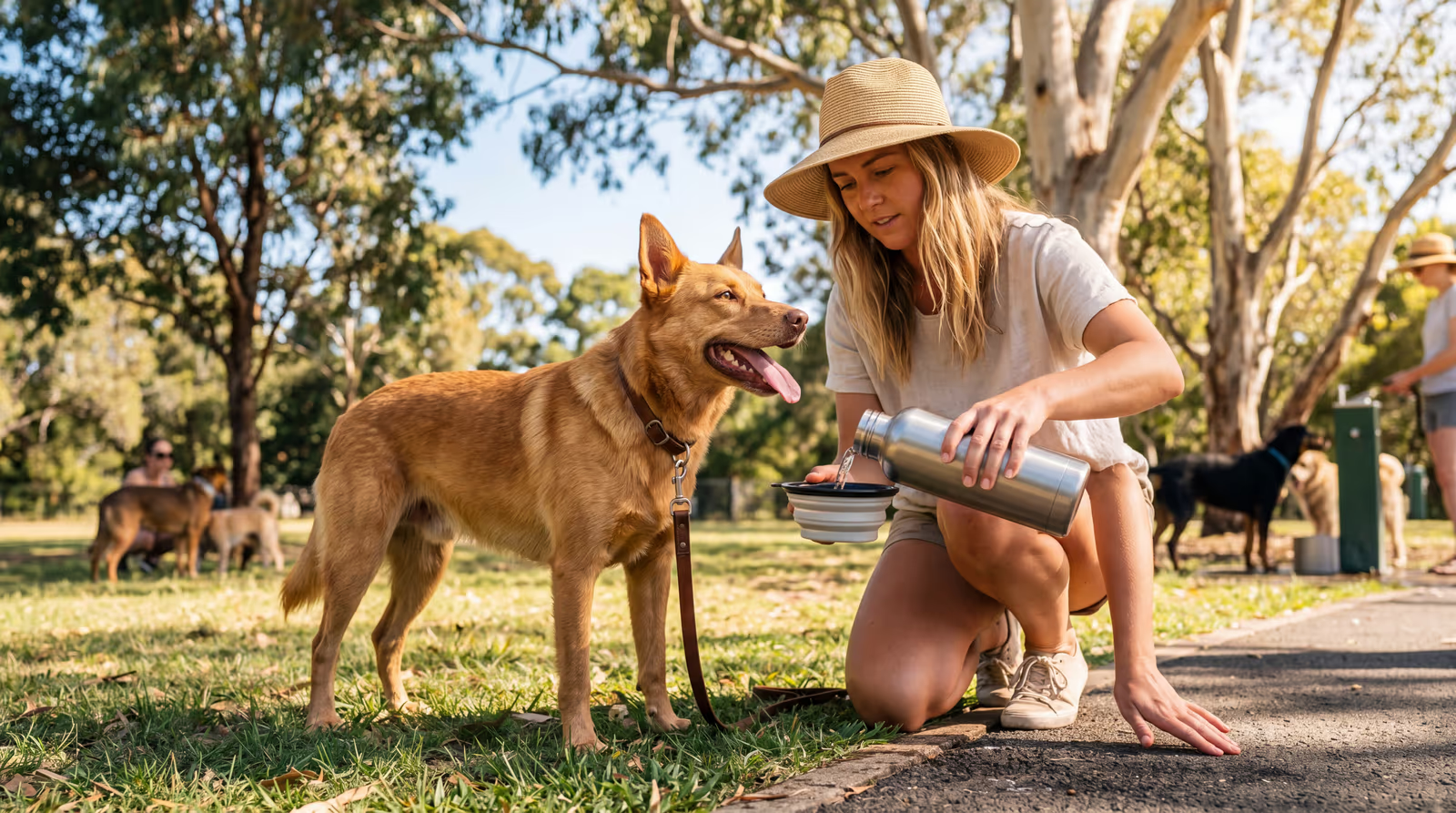
Summer Dog Park Safety (2026): Beat the Heat and Keep Your Dog Safe
A guide to summer dog park safety in the US, avoiding heatstroke and hot pavement, hydration, the best times to visit, and the warning signs every owner must know.
US summers are brutal on dogs — from Phoenix asphalt to humid Southeast afternoons — and the dog park can turn from a joy into a genuine danger fast. Dogs can’t sweat the way we do, they rely on panting, which struggles in heat and humidity, so summer dog park safety comes down to smart timing, plenty of water, and knowing the warning signs. This guide will help you keep your dog cool, safe and still having fun all summer long.
Planning a cooler-weather visit? Browse the directory for a shaded, grassy park near you, or open the live map.
Time it right
The single most effective thing you can do is choose the right time of day. In summer:
- Early morning is king; the air and ground are cool, and parks are quieter.
- Late evening once the heat has dropped is the next best window.
- Avoid roughly 10am to 5pm on hot days. Both the air temperature and the radiant heat off the ground peak in this window.
A great session at 7am beats a dangerous one at noon every time. Many of the parks in our city guides note shaded options, see New York, Los Angeles, Chicago and Houston.
The seven-second pavement test
Hot ground burns paws, and the damage is real. Before you set off, do the seven-second test: press the back of your hand flat against the surface for seven seconds. If you can’t hold it comfortably, it’s too hot for your dog’s paws. Asphalt, concrete and sand get astonishingly hot in the sun, grass stays far cooler, so favor shaded, grassy parks and keep off hot parking lots and paths. Better still, pick a spot where they can get properly wet — our guide to dog parks with water lists the cooling options.
Hydration and shade
- Bring more water than you think you need, plus a bowl. Don’t rely on the park tap working.
- Offer water often, small, frequent drinks before, during and after play.
- Find shade for breaks. A shady tree, a shelter or an umbrella lets your dog cool down between bursts of activity.
- Keep sessions short. A few short play bursts with rests beats one long, exhausting run.
- Watch for overdoing it. Some dogs will literally run themselves into trouble. It’s your job to call breaks.
Know your dog’s risk
Some dogs are far more vulnerable to heat than others. Take extra care with:
- Flat-faced (brachycephalic) breeds, pugs, bulldogs, French bulldogs and boxers can’t cool themselves efficiently and overheat dangerously fast.
- Senior dogs and puppies, whose temperature regulation is less robust.
- Overweight or unfit dogs, and thick double-coated breeds.
- Dogs with heart or respiratory conditions.
If your dog is in a high-risk group, be very conservative, sometimes the kindest thing on a hot day is to skip the park entirely and do something cool and gentle instead.
Heatstroke: the signs and what to do
Heatstroke is a life-threatening emergency, and it can develop frighteningly quickly. Learn the signs:
- Early: heavy, frantic panting, bright red gums, thick drool, weakness, a dog that won’t settle.
- Serious: staggering, vomiting or diarrhea, confusion, collapse, seizures.
If you suspect heatstroke, act immediately: move your dog to shade, start cooling them with cool (not icy) water over the body, offer small sips of water, and get to a vet straight away, call ahead. Don’t wait to “see if they improve”. Rapid cooling and veterinary care save lives.
How to cool an overheated dog (and what not to do)
Getting the cooling right matters. Do:
- Move to shade or air conditioning immediately and stop all activity.
- Pour cool (not icy) water over the whole body, especially the belly, armpits and groin where big blood vessels run close to the surface.
- Keep air moving with a fan or breeze to help evaporation.
- Offer small sips of cool water, never force a confused dog to drink.
- Go to the vet regardless, even if your dog seems to recover. Internal damage from heatstroke can show up hours later.
Don’t use ice or ice-cold water, it can cause blood vessels to constrict and actually trap heat, and risks shock. Steady cooling beats extreme cooling.
Summer paw and coat care
Two more warm-weather essentials. Paws take a beating in summer, check the pads regularly for burns, cracks or blisters, especially after walking on any hard surface, and stick to grass and shade. If your dog will tolerate it, walking on cooler surfaces and keeping nails trimmed helps too.
Coats are widely misunderstood. For most double-coated breeds, that coat actually insulates against heat as well as cold, so resist the urge to shave it, a shaved double coat can leave a dog more prone to sunburn and overheating. Regular brushing to remove loose undercoat is far better. Light-coated and thin-furred dogs, on the other hand, can genuinely sunburn, so a dog-safe sunscreen on exposed pink skin (nose, ear tips, belly) is worth considering on bright days.
Cool alternatives for very hot days
When it’s simply too hot for the park, your dog still has options: a swim at a dog beach or a dog-friendly waterway, a paddle pool in a shaded backyard, indoor enrichment and training games, or a frozen treat to chew. Save the big park sessions for the cool of the morning, and everyone stays happy and safe.
Frequently asked questions
What temperature is too hot for the dog park?
There’s no single number, because humidity, shade and your dog’s breed all matter, but once it climbs into the high 70s°F you should take real care, and above the mid-80s°F it’s safest to skip the midday park entirely. Flat-faced breeds, seniors and overweight dogs struggle at far lower temperatures than fit, long-nosed dogs.
How do I know if the ground is too hot for my dog’s paws?
Use the seven-second test: press the back of your hand to the surface for seven seconds. If it’s too hot for your hand, it’s too hot for paws and can cause burns. Grass stays much cooler than asphalt, concrete and sand, so stick to shaded, grassy parks on hot days.
What are the signs of heatstroke in dogs?
Early signs include heavy, frantic panting, bright red gums, thick drooling, weakness and a dog that won’t settle. It can progress to staggering, vomiting, collapse and seizures. Heatstroke is a life-threatening emergency, start cooling your dog with cool (not icy) water immediately and get to a vet straight away.
When is the best time to take a dog to the park in summer?
Early morning is best, cool air, cool ground and quieter crowds. Late evening once the heat drops is the next best option. Avoid roughly 10am to 5pm on hot days, when both the air and the ground are at their most dangerous.
Keep summer fun and safe
With a little planning, your dog can enjoy the park all summer: go early, test the ground, carry plenty of water, find shade, and know the warning signs of heatstroke. When in doubt, choose the cooler, gentler option, there’s always another day for a big run.
Find a shaded, grassy park near you on DogParkFinder →, with photos and facilities, or open the live map. And don’t forget warm-weather parasites: see our tick prevention guide.
Compare nearby dog parks before you leave
Open the directory to check fenced status, reviews, photos, map distance, and local park details across the USA.
Keep reading
Dog Park First Aid (2026): Handling Emergencies Calmly and Quickly
A practical dog park first aid guide — what to keep in your kit, how to handle cuts, bites, heatstroke, choking and other emergencies, and exactly when to rush to the vet.
Snake Safety for Dogs at US Parks (2026): A Survival Guide
A guide to snake safety for dogs at US parks, where and when rattlesnakes and other snakes are active, how to avoid them, the signs of a snake bite, and what to do.