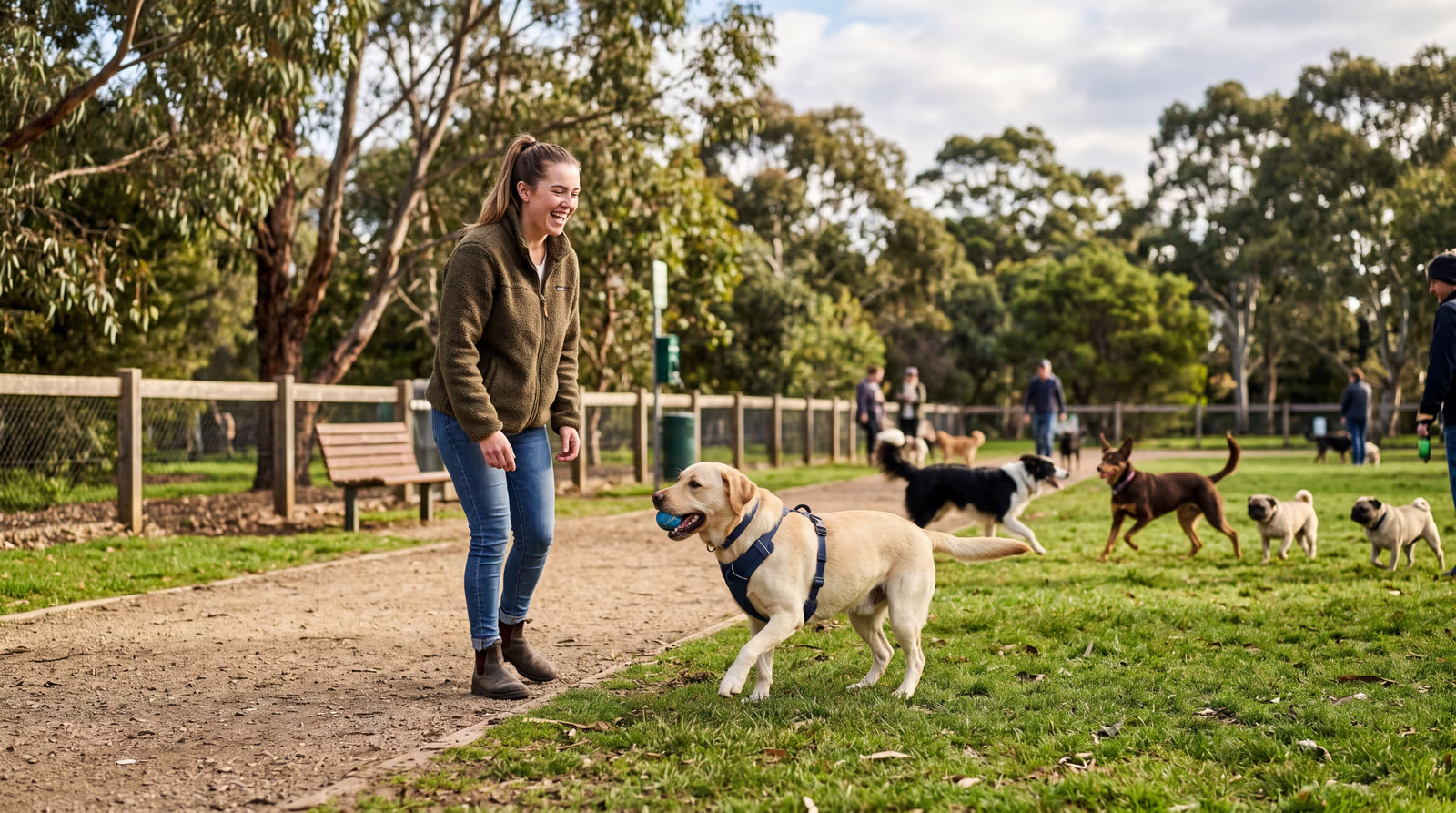
Off-Leash Dog Parks Near Me (2026): How to Find the Best One
How to find the best off-leash dog parks near you: the directory and map, what to look for, park types, state-by-state starting points, and how local leash laws vary.
Searching for off-leash dog parks near me is one of the most common things a dog owner does, but the best park for your dog depends on more than just distance. This guide explains how to find off-leash parks near you quickly, what to look for so you pick the right one, the different types of parks out there, where to start in your state, and how the rules vary from city to city. With a little know-how, you’ll always find the perfect spot for your dog.
The fastest way to start is to browse the directory or open the live map, search your city or ZIP, and sort by distance.
The quickest way to find a park near you
Here’s the problem with searching the usual way: off-leash areas are run by thousands of separate city and county Parks & Rec departments, each with its own page (if it has one at all). Checking them one by one is slow, and a generic maps app can’t tell you whether a park is actually off-leash, fully fenced, or any good.
A dedicated directory solves that. The Dog Park Finder USA directory is built around the details that actually matter: off-leash status, fencing, amenities, photos, and reviews. The live map sorts everything by distance so you can see what’s closest at a glance — saving you the frustration of driving to a park only to discover it’s on-leash, fenced when you wanted open space, or simply not as advertised.
The reviews and photos are especially useful, because they tell you what a park is really like from the people who use it: whether it’s busy, well-maintained, genuinely fenced, and suited to your kind of dog. (Our directory is growing fast across all 50 states — if your local park isn’t listed yet, you can add it.)
What to look for in an off-leash park
The “best” off-leash park is the one that fits your dog, so it’s worth knowing what to weigh up:
- Fencing — if your dog’s recall isn’t rock-solid, a fully fenced park is far safer than an open field. Double-gated entries are the gold standard.
- Space — a big, high-energy dog needs room to run; a small or nervous dog is often happier somewhere compact and quiet.
- Surface — soft grass is kind on paws and joints; bare dirt turns to mud in winter and dust in summer.
- Shade and water — non-negotiable for hot US summers; a fountain and trees make a park usable year-round.
- Separation — a dedicated small-dog or timid-dog area is a big plus for little or shy dogs.
- Practicalities — parking, lighting for winter evenings, trash cans, and seating round out the picture.
You’ll also want to think about the crowd and timing. Some dogs thrive in a busy, social park; others find it overwhelming and do better at quiet times. Matching the park — and the time of day — to your dog’s temperament makes all the difference.
The different types of off-leash parks
Off-leash areas come in several forms, and knowing the difference helps you choose:
- Open fields and large off-leash areas offer lots of space but rely on good recall — there’s nothing between your dog and the parking lot except training.
- Fully fenced dog parks provide a secure boundary, ideal for puppies, reactive dogs, and escape artists.
- Dog beaches let water-loving dogs swim and run on the sand, with their own rules and tides — see our best dog beaches in the US roundup.
- Parks with extra features — agility equipment, water-play areas, separate small-dog zones — add variety for dogs who want more than a flat field.
Many owners keep a few different types in rotation to suit different days and moods: a fenced park for training weeks, a big open area for long runs, a beach for hot Saturdays.
Fenced or open: which suits your dog?
The single biggest decision is between a fenced area and an open one, and it comes down to one honest question: does your dog come back when called, every time, even mid-zoomies?
If the answer is anything but a confident yes, start fenced. A secure boundary means a blown recall is a training moment instead of an emergency, which is why fenced areas are the right call for puppies, new rescues whose history you don’t know, sighthounds and huskies with strong chase instincts, and any dog still learning. There’s no shame in it — plenty of experienced owners use fenced areas for life because it lets everyone relax.
Open areas reward the work once recall is solid: they’re usually bigger and quieter, and the extra space lets dogs spread out instead of crowding one enclosure. A long line is the classic bridge between the two — all the sniffing freedom of an open area while you’re still proofing that recall.
What to bring
A small kit makes every visit smoother:
- Water and a bowl — even at parks with fountains, because they fail and lines form.
- The leash, always — you’ll need it at gates, the parking lot, and the walk in.
- High-value treats for recall practice while distractions are everywhere.
- Poop bags — more than you think; fines apply, and full trash cans happen.
- A towel in the trunk for muddy winters and post-swim beach days.
Find parks in your state
Designated off-leash areas exist in every state. Jump straight to your state hub and drill down to your city:
- California — including Los Angeles and San Diego
- Texas — including Houston, Austin, and Dallas
- New York — including New York City
- Florida — including Miami and Jacksonville
- Illinois — including Chicago
- Washington · Colorado · Arizona · Massachusetts
Each state page breaks down into city pages, so you can drill from “my state” to “parks within driving distance” in a couple of taps.
Understanding the rules near you
A crucial thing to remember is that leash laws are set locally. Your state sets the broad framework, but it’s your county and city that decide exactly which areas are off-leash, what hours apply, and the conditions — so the rules genuinely differ from town to town.
The near-universal principles across the US:
- Dogs must be leashed in public unless they’re in a designated off-leash area.
- Even off-leash, your dog must stay under control — responding to your commands, in sight, and recallable away from other dogs, people, and wildlife.
- Prohibited zones apply almost everywhere: children’s playgrounds, picnic and food areas, and athletic fields in use are off-limits even inside otherwise dog-friendly parks.
The on-site signage is always the source of truth for where you are. For the full state-by-state breakdown, see our guide to dog park rules across the US.
Your first visit to a new park
A two-minute routine makes every new park a good experience:
- Walk the perimeter on-leash first — your dog settles, you spot fence gaps, gates, and exits.
- Read the signage — off-leash zone boundaries, hours, and any seasonal changes.
- Watch the crowd for a minute — if the play looks too rough for your dog, come back at a quieter time.
- Then unclip — and keep the leash handy for gates, the parking lot, and busy paths.
If your dog is new to off-leash parks entirely, our guides to introducing your dog to a dog park and dog park etiquette cover the full playbook, from first greetings to reading body language.
Park or beach?
If you live anywhere near the coast or a big lake, your “nearest off-leash area” might actually be a dog beach — and for water-loving dogs, nothing beats it. Beaches bring their own considerations: tides change how much sand is available, seasonal restrictions are common (many beaches limit dogs in the busy summer months or to certain hours), and salt water means packing fresh water and a rinse-off towel. Surf adds risk for weak swimmers, so calm bays and lakeshores suit beginners better than open breaks.
A good rhythm for coastal owners is parks during the week and a beach on the weekend, or a beach in summer and grassy parks through winter. Our best dog beaches in the US guide covers the standouts coast to coast, with city-by-city detail for San Diego, Los Angeles, and Florida.
When to go
Timing changes a park completely. Early weekday mornings are calm and sociable — ideal for puppies, seniors, and dogs building confidence. Weekend late-afternoons are the busiest and best for high-energy dogs that thrive in a crowd. In summer, stick to mornings and evenings and test the ground with the back of your hand before setting off; in winter, a midday session makes the most of the warmth and the quieter parks.
It’s also worth learning your local park’s own rhythm. Most have a regular morning crew and an after-work rush, with quiet windows in between — a few visits at different times will show you exactly when your dog’s favorite playmates (or the dogs they’d rather avoid) tend to arrive.
City guides to get you started
If you’re in or near a major metro, our local guides round up the best off-leash parks and explain the area’s rules. Chasing sand instead of grass? Our dog beach near me guide does the same job for the coast. For parks, see the best dog parks in New York, Los Angeles, Chicago, Houston, Phoenix, and Miami — plus San Diego, Dallas, Austin, and Philadelphia. Each guide funnels straight through to the directory and live map, so you can check the details and plan your visit in a couple of taps.
Frequently asked questions
How do I find off-leash dog parks near me?
The easiest way is to use the Dog Park Finder USA directory or live map: search your city or ZIP and it sorts parks by distance. You can filter for features like fully fenced parks, check photos and reviews, and confirm a park’s off-leash status before you go — far quicker than piecing together individual city Parks & Rec maps.
What should I look for in an off-leash dog park?
Match the park to your dog. Look for secure fencing if your recall isn’t solid, enough space for your dog’s energy level, soft grassy surfaces, shade and water for hot days, a separate small-dog area if you have a little dog, and easy parking. Reviews and photos help you judge before you make the trip.
Are all dog parks off-leash?
No. Even within a single park, off-leash access is usually limited to a designated off-leash area, with on-leash sections and prohibited zones elsewhere, and some have posted hours. Always check the on-site signage and the park’s listing to confirm where and when your dog can be off-leash.
What does ‘voice control’ mean at an off-leash park?
It means your dog responds to your voice commands, stays within sight, and comes back when called — even around other dogs, people, and wildlife. Many US off-leash areas require it, and if your dog can’t manage it yet, a fully fenced park is the right place to practice.
How do off-leash rules vary between areas?
Leash laws are set by your state, county, and city, so designated off-leash areas, hours, and conditions differ from town to town. The near-universal rule is that dogs must be leashed in public unless they’re in a designated off-leash area and under control. Always read the signage where you are.
Find your perfect park
Finding a great off-leash park near you is easy when you know how: use the directory and map to see what’s closest, weigh up fencing, space, and features to suit your dog, and always check the local rules and signage. Do that, and you’ll never be short of a brilliant spot for your dog to run, sniff, and socialize.
Find off-leash dog parks near you on Dog Park Finder USA → — with off-leash zones, fencing status, photos, and reviews — or open the live map to see what’s closest right now.
Compare nearby dog parks before you leave
Open the directory to check fenced status, reviews, photos, map distance, and local park details across the USA.