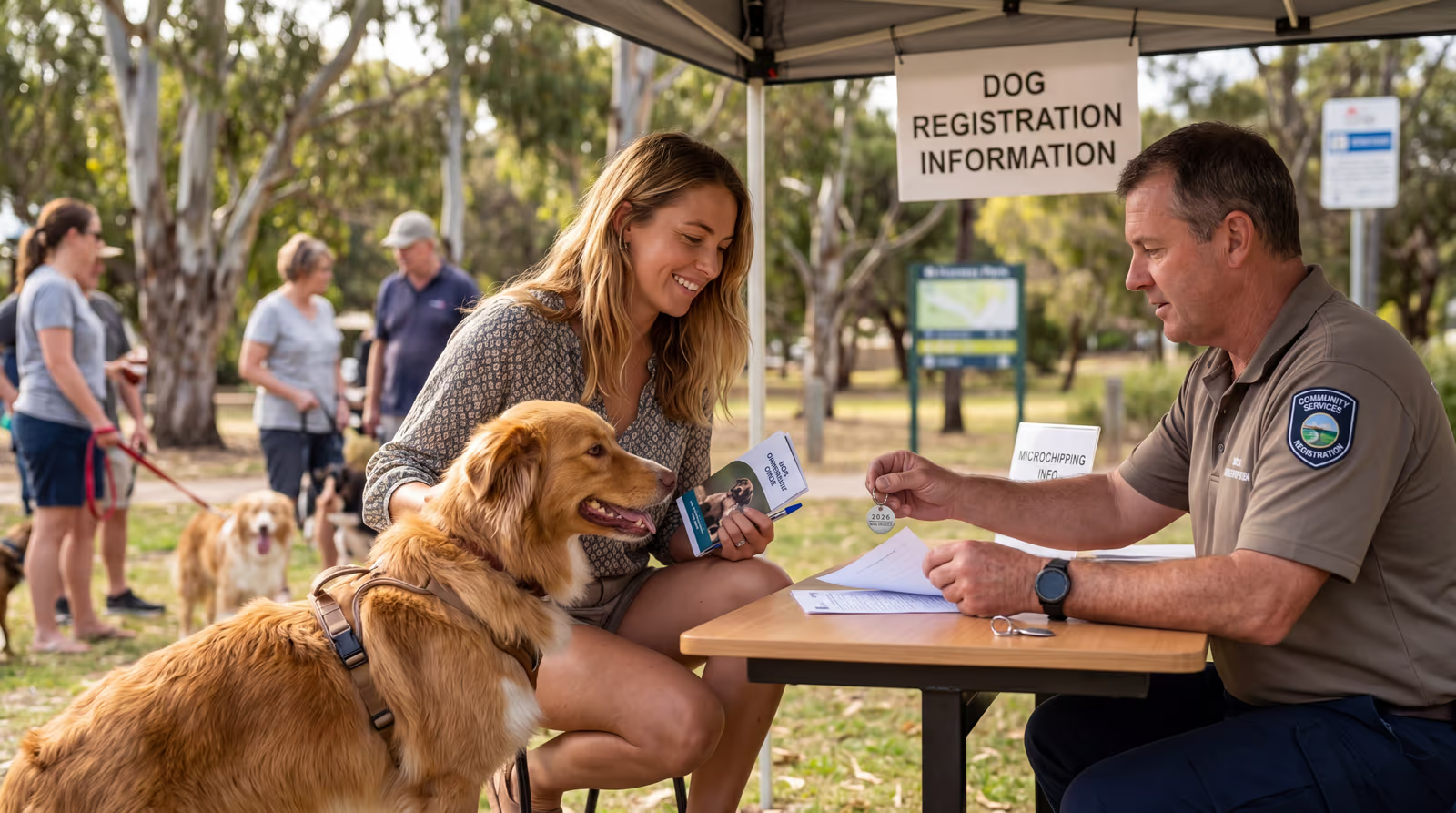
Dog Licensing Requirements in the USA (2026): A State-by-State Guide
A clear guide to dog licensing requirements in the US, why you must license and vaccinate your dog, how it works by state and city, costs, discounts, and penalties.
Licensing your dog isn’t the most exciting part of pet ownership, but it’s a legal requirement in most of the US and a genuinely important one — it’s how lost dogs find their way home and how cities fund the animal services we all rely on, from shelters to off-leash parks. The rules differ from state to state and city to city, which can be confusing, so this guide lays out the essentials: why licensing and vaccination matter, how it works around the country, what it costs, and the discounts and penalties to know about.
Once your dog’s sorted, browse the directory to find an off-leash park near you, or open the live map. Our off-leash parks guide explains how to pick the right one.
Why licensing, rabies, and microchipping matter
It’s worth understanding the purpose, because it makes the requirement feel a lot less like red tape. Rabies vaccination is the legal cornerstone — required by law in nearly every state — and most licenses are issued only on proof of a current rabies shot. A license enrolls your dog with your city or county and is usually renewed each year; the fees fund the services that benefit every dog owner: animal control, shelters, and the upkeep of dog parks and off-leash areas. Microchipping gives your dog permanent identification — a tiny implant carries a unique number linked to your contact details in a registry — so any vet or shelter can scan a lost dog and find you.
Together, these work as a safety net. A dog who slips out the gate and ends up at a shelter stands a vastly better chance of a quick, happy reunion if they’re licensed, chipped, and vaccinated, because the records point straight back to you. For the small annual cost, it’s some of the cheapest insurance you’ll ever buy for your dog’s safety — quite apart from being the law.
The common requirements
While the detail varies, the core requirements are consistent across the country. You must keep your dog’s rabies vaccination current, and in most areas license your dog with your city or county once they reach a set age — commonly three or four months. Many cities also require or strongly encourage microchipping, and a few (such as Los Angeles) mandate it. Licenses usually need to be renewed each year, and you must update your details whenever you move or change your phone number, since out-of-date records defeat the whole purpose. If you move to a new city or county, you’ll typically need to license with your new jurisdiction.
Failing to license — or letting a rabies shot lapse — comes with penalties, fines that are usually well in excess of the fee, so it genuinely pays to stay on top of it.
How it works by state and city
Because dog licensing is administered at the city or county level under each state’s framework, the precise process, fees, and timing are set by your local animal services rather than uniformly across a state. In big cities, you’ll usually license online with proof of a current rabies certificate. New York City, Chicago, Los Angeles, Houston, and most major metros all run their own licensing programs, with annual renewal and altered-dog discounts. Some states centralize parts of the process while leaving fees to localities; others leave it entirely to the city or county.
The practical takeaway is simple: the rules are similar everywhere — vaccinate, license, and ideally microchip your dog — but for the exact fees, due dates, and process, your city or county animal services website is the definitive source. It’s the one place that reflects the current requirements for where you actually live. Browse your state hub to start: California, Texas, New York, Florida, Illinois.
Costs, discounts, and reduced fees
License fees are generally modest, and there are several common ways they’re reduced. The biggest is the spay/neuter discount: most jurisdictions charge significantly less to license an altered dog, as an incentive to reduce unwanted litters, so spaying or neutering often pays for itself in lower fees over time. Reduced fees are also widely available for seniors and for service dogs, which are often exempt entirely. Some areas offer a multi-year license that saves you renewing every year. It’s always worth checking what discounts your city or county offers, as they can make a real difference to the cost.
Keeping on top of it
The easiest way to avoid fines and keep your dog protected is to treat licensing as a simple annual habit. Set a reminder for your renewal date (and your rabies booster), keep your microchip and license details current whenever your circumstances change, and re-license promptly if you move. Most cities now make all of this easy to do online. A few minutes once a year keeps you on the right side of the law and, far more importantly, keeps your dog’s safety net firmly in place.
Licensed and ready to explore
Once your dog is licensed and vaccinated, the reward is every off-leash area your city provides. Find yours by state: California, Texas, New York, Florida, Illinois, Washington, Colorado — or jump straight to the full directory and sort by distance.
Frequently asked questions
Do I have to license my dog in the US?
In most places, yes. The majority of US cities and counties require you to license your dog, usually once they reach a set age (commonly three or four months) and tied to a current rabies vaccination. Licenses typically renew each year, and fines apply for an unlicensed dog. Rules are set locally, so check your city or county animal services.
What is the difference between a microchip and a license?
They’re two separate things. A microchip is a tiny implant with a unique number linked to your contact details in a registry, providing permanent ID. A license is enrolling your dog with your city or county and paying a fee, usually proving a current rabies shot. Licensing is required in most areas; microchipping is required in some cities and recommended everywhere.
How much does it cost to license a dog?
Fees vary by city and county but are typically modest, and almost always much cheaper for a spayed or neutered dog — most jurisdictions offer a significant discount to encourage altering. Reduced fees are also common for seniors and service dogs. Some areas offer multi-year licenses so you renew less often.
What happens if I don’t license my dog?
You can be fined, often for considerably more than the license fee itself, and a lapsed rabies vaccination can carry its own penalty. Beyond the legal risk, an unlicensed, unchipped dog is far harder to reunite with you if they’re lost, since shelters rely on those records. Licensing is cheap insurance for your dog’s safety.
A small task with a big payoff
Dog licensing, rabies vaccination, and microchipping might be humble admin, but they’re among the most important things you’ll do for your dog — the safety net that brings them home if they’re ever lost, and your contribution to the services every dog owner uses. License and chip your dog, keep their shots and your details current, take advantage of the spay/neuter and senior discounts, and check your city or county website for the specifics. It’s a small, cheap task with a genuinely big payoff in peace of mind.
For the on-the-ground rules once your dog is licensed, see our guide to dog park rules across the US, then find an off-leash park near you on Dog Park Finder USA → or open the live map.
Compare nearby dog parks before you leave
Open the directory to check fenced status, reviews, photos, map distance, and local park details across the USA.
Keep reading

Dog Park Etiquette: 12 Unwritten Rules Every Owner Should Know (2026)
A practical guide to dog park etiquette — the unwritten rules, how to read dog body language, what to bring, and the mistakes to avoid for a safe, friendly visit.

Dog Park Rules in the USA: A State-by-State Guide (2026)
Dog park and off-leash rules across the US, how leash laws work state by state, what 'voice control' means, licensing and rabies requirements, and how local ordinances differ.